Harley Milling grades the durum we receive based on the Grain Trading Standards for the relevant season (Grain Trading Standards – GTA). The 2026-2027 season is graded to the following minimum standards.
Protein content refers to the percentage of the grain’s weight that is made up of protein. This is tested through an NIR machine.
Test weight is a measurement of the grain’s density; it is weighed within a given space using a chondrometer.
Screenings refer to the loose material that cannot be milled to make semolina. This can be small or broken kernels or chaff from other parts of the durum wheat. The results below are obtained by separating the test weight of grain using the test sieve; the results are based on the percentage by weight.
Falling numbers is a measurement of the level of sprouting in wheat. As wheat begins to germinate, it converts the starch in the kernel into sugars, and this can result in brown spots and cracking due to the burnt sugar in pasta.
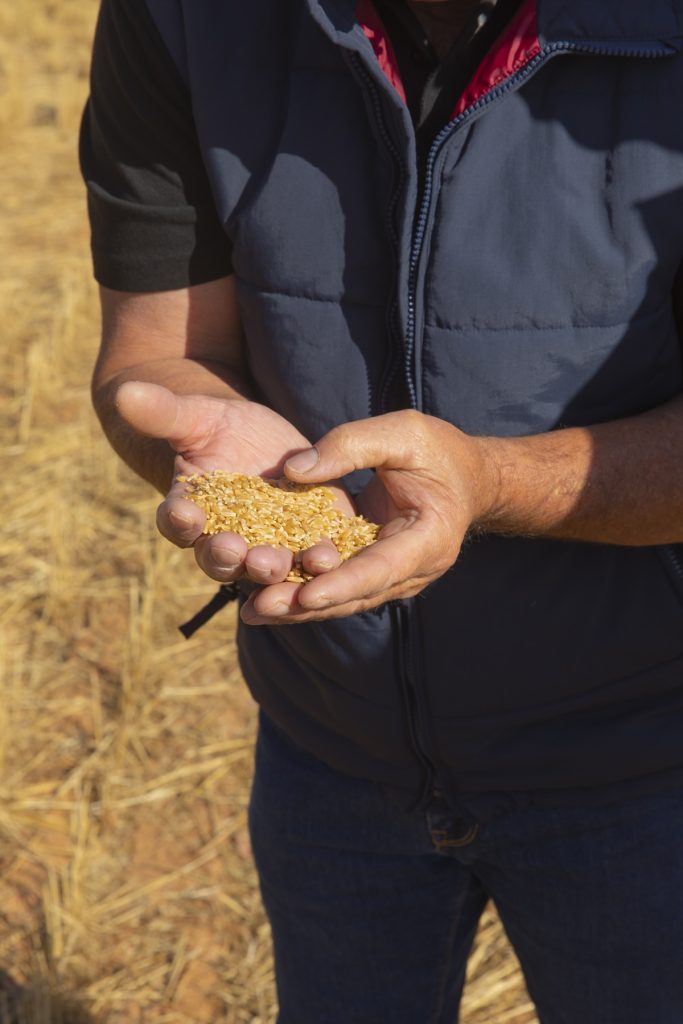
Vitreousness describes the uniformity of the kernel colour. A unique trait of Durum wheat is its yellow centre, which makes bright yellow semolina, and any white spots in the grain can make the Semolina dull. These spotted kernels are “non-vitreous”; vitreousness is the amount of grain without white spots in a given sample.